 xyh@xiongyihua-plastic.com



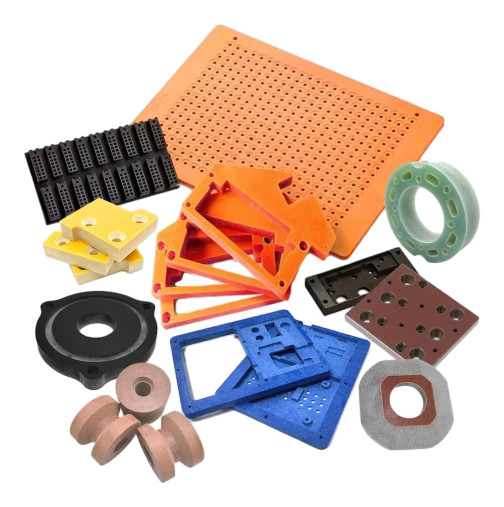
Carbon Fiber Board – High-Strength Lightweight Composite Material for Industrial Applications
Time of issue: 2026-04-17
High-performance carbon fibre composite material providing lightweight, high strength and excellent dimensional stability to various applications. Manufactured by combining carbon fibre fabric with epoxy and/or other resin systems using high-temperature and high-pressure molding processes. End product is rigid board material that exhibits superior mechanical properties, an extensive range of physical properties and long serviceability; therefore, widely used by/to modern engineering/industrial markets.
The manufacturing of carbon fibre board involves stacking several layers of carbon fibre fabric at specified angles to provide an optimum strength distribution. Each layer is completely impregnated with the resin prior to being cured in a controlled environment. Curing the composite in this manner establishes a very dense internal structure (low voids) and a good fibre to resin bonding. As a result, the finished product achieves high rigidity, excellent tensile strength and consistent property performance across the entire area of the composite board.
A Carbon Fiber Board is superior in terms of the Strength-to-Weight Ratio (SWR). When compared to several traditional materials, it has a much higher level of stiffness and tensile strength while still being very light weight. Engineers will be able to reduce the weight of their overall system, while still achieving the proper levels of performance from a structural point of view. The carbon fiber board is extremely advantageous for applications that require an overall weight reduction to directly correlate to improvements in efficiency, speed, or energy consumption.

Carbon fiber boards also exhibit excellent dimensional stability in the form of very low coefficient of thermal expansion, making them maintain their shape when subjected to temperature changes as well as long term mechanical loads that may or may not be applied over time (e.g., measurement equipment; structural components; etc.). Therefore, when dealing with precision instruments, measurement systems, and structural components where precision is critical, the material will provide proper dimensional stability.
In addition to high strength, the fatigue characteristics of carbon fiber boards are remarkable. The material can support repeated applications of stress without exhibiting a demonstrable change in shape or performance; consequently, the material can be used for dynamic applications such as robotic arms, automation systems, drone structures, and high-performance machinery, which will constantly be subjected to movement and loading conditions.
Carbon fiber boards also exhibit exceptional thermal stability and mechanical property stability over a large range of temperatures in addition, they do not easily warp when exposed to elevated temperatures. Depending on the resin system used in the manufacturing process, they may also be resistant to moisture, as well as mild exposure to chemical compounds, which makes carbon fiber boards applicable to any industrial environment where there is a variety of different operational conditions.
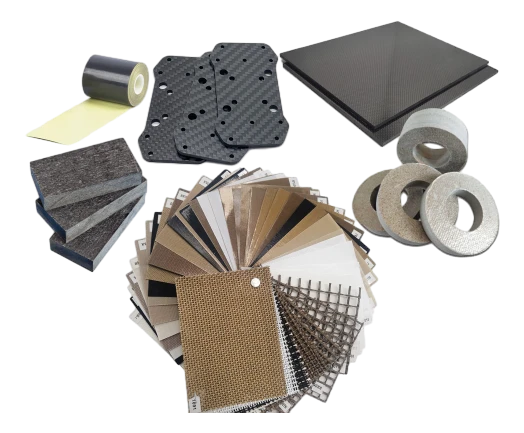
Another benefit to carbon fiber boards is their excellent machinability. Using appropriate machining techniques (cutting, drilling, milling, etc.), carbon fiber boards can be manufactured into precise shapes. The structure of carbon fiber boards is stable throughout the manufacturing process, resulting in accurate fabrication and clean edges from a properly manufactured carbon fiber board. Therefore, carbon fiber boards lend themselves well to the manufacture of custom-engineered components and precision-engineered parts.
Due to their balanced characteristics, carbon fiber boards have become commonly used in aerospace components, robotic systems, drone frames, automotive lightweight parts, industrial automation equipment, medical devices, and precision mechanical structures. They are particularly highly regarded within industries that require not only high-performance levels but also reduction of overall weight.
In general, carbon fiber boards are classified as "high-performance engineering materials" that combine a lightweight structure, high-strength properties, excellent mechanical characteristics (dimensional stability), and outstanding durability. Due to these mechanical properties, carbon fiber boards can be utilized in today's industrial applications, where efficiency, precision, and dependability are an essential part of the overall operation of an organization.
Contact Us



Company Headquarters
NO.2 Longxian Road, Xinsheng Community, Longgang Street, Longgang District, Shenzhen, Guangdong, China