 xyh@xiongyihua-plastic.com



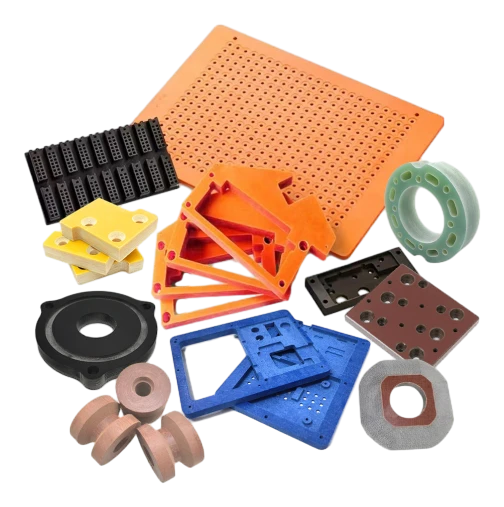
The Growing Industrial Value of Monolithic Textolite Rods
Time of issue: 2026-01-03
With the increasing demand for reliability, durability, and superior performance from modern industrial equipment, the selection of base materials is becoming more critical than ever for manufacturers. Amongst these high-performance composite materials are Monolithic Textolite Rods, which have become an important component of modern industrial manufacturing and engineering because of their exceptional mechanical and insulating properties, as well as their manufacturing versatility.
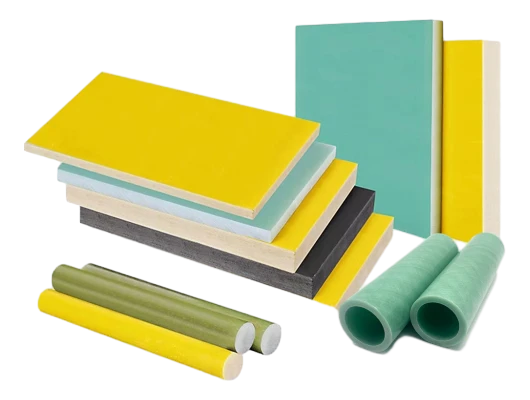
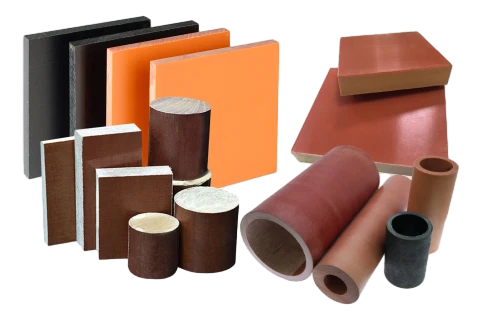
Monolithic Textolite Rods are produced from high-strength fabrics that are reinforced with thermosetting resin and then formed into solid rod shapes using high-temperature/pressure curing techniques. Unlike laminated composites where each layer must be joined to the next using adhesives, a monolithic structure ensures that the mechanical properties of Monolithic Textolite Rods are far superior to those of laminated composites and provides excellent dimensional stability, allowing for longer-lasting, more dependable structural solutions to meet the various requirements of today's industrial applications.
Industrial Development Driving Improvements in Material Performance
In industrial systems today, the way that equipment is treated and maintained while it is in operation for long periods of time is critical to the efficiency of production as well as the cost-effectiveness of the operation. Traditional materials tend to suffer fatigue, wear, or degradation of performance when subjected to heavy loads, repeated uses, or complicated environments. A uniform structure within a monolithic design creates the same long-term, proven mechanical performance and consistent electric insulation of Monolithic Textolite Rod, which makes them ideal candidates for today's modern industrial environments.
As automated machine tools, electric controls, and precision machined parts become more common, a higher demand has developed for high-performance composites. Monolithic Textolite Rods, with their established manufacturing processes and reliability, represent a primary material choice as system upgrades continue to be implemented in industry.
Stable Structural Benefits
Structurally speaking, Monolithic Textolite Rods consist of fibreglass strands impregnated with resin that has been cured to produce a dense, homogenous rod. The design of this monolithic rod greatly increases the compressive, bending, and impact strength of the rod, while eliminating the potential of cracking or deforming when stressed.
In practice, the rods maintain dimensional stability during loads and friction. They make excellent bushings, gears, sliding and other structural supports that increase the operational life of equipment and reduce maintenance costs.
Reliable Electrical Insulation Monolithic Textolite Rods provide excellent dielectric strength (dielectric strength is defined by many sets of NCC/BIS/ASTM etc., but usually falls about the same) and voltage-resistance (as opposed to current). Therefore, Monolithic Textolite Rods are widely used in motors, control cabinets etc. that require both mechanical support (for overall safety and efficiency of operation) and electrical insulation (for safe operation).
Excellent Machining. Beyond their mechanical and electrical performance, Monolithic Textolite Rods perform exceptionally well in machining. Monolithic rods can be drilled, milled, or turned for precision and consistency without fear of chipping or delaminating. This allows the fast and cost-effective creation of custom parts based on the specific design and application requirement.
Normal Characteristics of Monolithic Textolite Rods
Due to the optimal balance between performance and cost, Monolithic Textolite Rods are used in many different applications across different sectors, such as:
1. Electrical Equipment – electrical insulators, bushings, and other isolation components;
2. Mechanical Equipment – wear-resistant products, guides, and components that slide;
3. Industrial Automation – structural and precision supports;
4. Aerospace, Transportation, and High-Performance Composite Assemblies;
Monolithic Textolite Rods are recognized in both traditional manufacturing and high-precision applications for their monolithic (solid) construction and reliability.
Reliability and Long-Term Value
Material stability over an extended period affects maintenance costs and equipment life. Monolithic Textolite Rods have been proven to have a high level of durability in the Industrial setting. They can consistently support medium to high loads and have minimal downtime due to the failure of the material.
Companies that require reliable operation and long-term reliability should use this well-established and extensively used product to ensure the safety of their production processes and stability of their equipment.
Conclusion
Even as other materials continue to evolve in their respective industries, Monolithic Textolite Rods will continue to be the preferred choice due to the combination of reliable mechanical behaviour, consistent electrical insulation properties and excellent machinability. As safety, durability and reliability become increasingly important for modern machinery, the need for Monolithic Textolite Rods will continue to rise, ensuring the long-term viability of industrial machinery.
More Information
Contact Us



Company Headquarters
NO.2 Longxian Road, Xinsheng Community, Longgang Street, Longgang District, Shenzhen, Guangdong, China