 xyh@xiongyihua-plastic.com



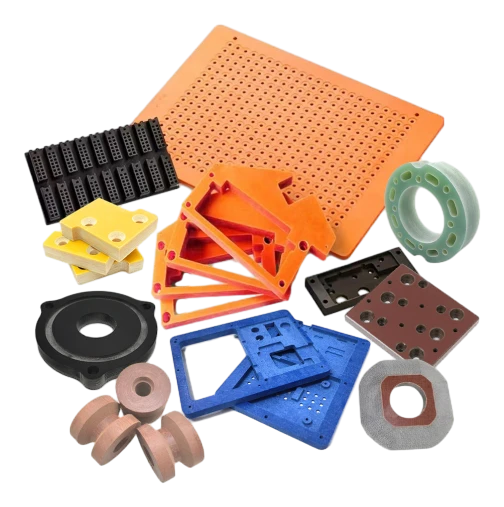
SMC Fiberglass Reinforced Electrical Insulation Sheet
Time of issue: 2026-10-14
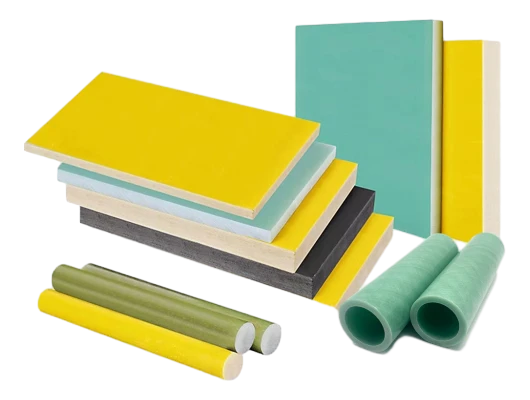
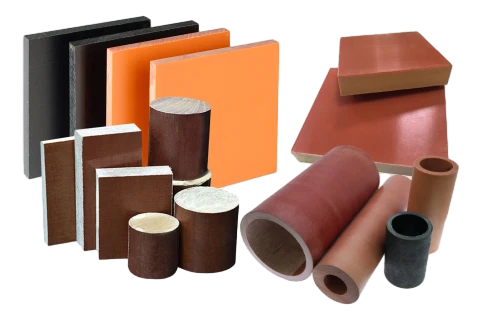
SMC fiberglass reinforced electrical insulation sheet is a rigid, compression-moulded thermoset board used for electrical isolation and structural support. It is commonly specified for switchgear partitions, busbar supports, terminal boards, insulating spacers and drawing-based components.
The sheet combines unsaturated polyester resin, glass fibre reinforcement and functional fillers. Once moulded under heat and pressure, it forms a stable board that offers a practical balance of electrical insulation, mechanical strength, low moisture uptake and dimensional stability.
SMC originally means Sheet Moulding Compound, the semi-finished material placed in a heated press. On this page, “SMC insulation sheet” refers to the cured, moulded board supplied as full sheets, cut panels or finished insulation parts.

Product at a Glance
| Product | SMC Fiberglass Reinforced Electrical Insulation Sheet |
|---|---|
| Material system | Unsaturated polyester resin, glass fibre reinforcement and functional fillers |
| Material type | Rigid thermoset composite |
| Manufacturing method | Hot compression moulding |
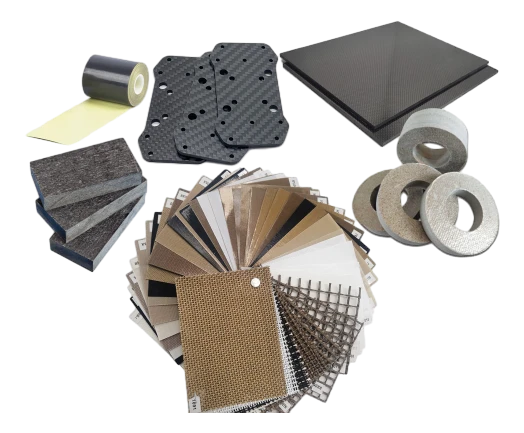
| Supply form | Full sheet, cut-to-size panel or CNC-machined component |
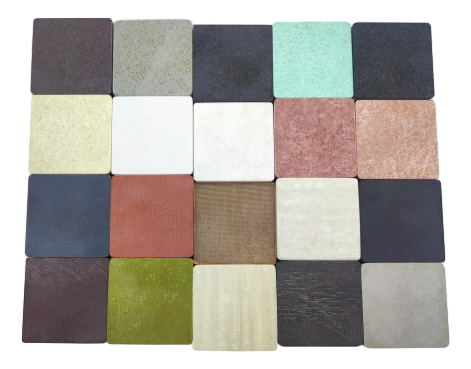
| Colour | Red, white and project-specific colours, subject to grade and production confirmation |
| Processing | Saw cutting, drilling, routing, CNC milling, slotting, chamfering and deburring |
| Typical use | Electrical barriers, supports, mounting plates, terminal boards and custom structural insulation parts |
Why Engineers Specify SMC Insulation Sheet
Electrical insulation with structural strength
An insulating component often has to do more than separate live parts. It may also carry a busbar, hold a terminal assembly or remain flat under fastening pressure. Glass reinforcement gives SMC board the stiffness and strength required for these structural roles.
Resistance to arc tracking
Electrical-grade SMC formulations are available with strong arc and tracking performance. This makes the material relevant to switchgear, power distribution and other assemblies where surface leakage paths must be controlled. The required CTI, PTI or arc-resistance value should always be stated on the drawing or purchase specification.
Low moisture uptake
Low water absorption helps the board retain stable dimensions and useful insulation performance in humid indoor environments. It also makes SMC a practical alternative to paper-based laminates where moisture is a concern.
Stable moulded construction
SMC is formed under heat and pressure rather than extruded. The cured thermoset structure does not soften and remelt like an ordinary thermoplastic. Its low moulding shrinkage and good dimensional stability are useful for larger panels and repeated machined parts.
Flame-retardant grades are available
SMC can be formulated for flame-retardant electrical applications. Flame performance is not defined by the name “SMC” alone, however. The exact formulation, tested thickness, test method and supporting report must match the project requirement.
Typical Technical Parameters
The following figures are public reference benchmarks for an electrical-grade moulded SMC sheet. They help with early material screening but are not guaranteed values for every SMC formulation. Final values must be confirmed against the technical data sheet and batch documentation for the grade offered.
| Property | Electrical-Grade SMC Reference | Test Reference |
|---|---|---|
| Density | 1.65–1.95 g/cm³; published typical value 1.79 g/cm³ | GB/T 1033.1 |
| Water absorption, 3 mm sheet | ≤0.20%; published typical value 0.13% | GB/T 1034 |
| Flexural strength | ≥170 MPa lengthwise; ≥150 MPa crosswise | GB/T 1449 |
| Tensile strength | ≥55 MPa | GB/T 1447 |
| Compressive strength | ≥150 MPa | GB/T 1448 |
| Heat deflection temperature under load | ≥190°C (374°F) | GB/T 1634.2 |
| Electrical strength | ≥12 kV/mm in transformer oil at 23°C ±2°C | GB/T 1408.1 |
| Surface resistivity | ≥1.0 × 10¹² Ω | Published grade data |
| Insulation resistance, normal condition | ≥1.0 × 10¹³ Ω | GB/T 10064 |
| Arc resistance | ≥180 seconds | GB/T 1411 |
| Comparative tracking index | CTI ≥600 V | GB/T 1411 / IEC 60112 basis |
| Flammability | V-0 available on tested formulations | UL 94; grade and thickness must be verified |
Specification note: Resin chemistry, glass content, filler system, colour and thickness can change the finished properties. Do not approve an SMC sheet from generic values alone.
Common Applications
| Application | Typical Part | Why SMC Is Considered |
|---|---|---|
| Switchgear | Partitions, lining panels and phase barriers | Electrical isolation, tracking resistance and panel rigidity |
| Busbar systems | Supports, clamps, spacers and mounting plates | Combines insulation with mechanical support |
| Power distribution equipment | Insulating panels, brackets and structural components | Low moisture uptake and stable moulded construction |
| Terminal assemblies | Terminal boards, contact holders and outlet plates | Machinability, stiffness and electrical separation |
| Arc-control components | Arc shields and insulating covers | Grade-specific arc and flame performance |
| Electrical enclosures | Meter-box panels and internal insulation parts | Corrosion resistance and electrical insulation |
| Custom industrial equipment | Drawing-based spacers, barriers and supports | Can be cut and CNC machined into repeatable parts |
Switchgear and Distribution Panels
Switchgear is a primary application for SMC insulation board. The material can be used for internal partitions, lining panels, phase barriers and insulating supports. These components separate conductive parts while helping the assembly retain its designed spacing.
When specifying a panel, provide the working voltage, required creepage and clearance distances, service temperature, flame requirement and the position of all holes and cut-outs. The material grade must be matched to the equipment design rather than selected by colour alone.
Busbar Supports and Mounting Components
Busbar systems need firm support without creating an unwanted electrical path. SMC sheet can be machined into clamps, mounting plates and spacers with holes, slots and stepped profiles.
Fastener loads and edge distances should be checked during design. For highly loaded parts, generous radii and adequate material around fixing holes help reduce local stress.
Terminal Boards and Contact Supports
SMC is suitable for terminal boards, contact holders and outlet plates where electrical separation and mechanical stability are both required. CNC machining allows a single board to carry multiple holes, slots and mounting features.
For repeat production, a dimensioned drawing is preferable to a physical sample alone. It gives both parties a clear reference for tolerances, datum points and critical features.
Custom Machining and Fabrication
SMC electrical insulation sheet can be supplied as a standard panel or processed into ready-to-install parts. Available operations include:
- Cutting to finished length and width
- CNC milling and contour routing
- Drilling, countersinking and counterboring
- Slots, recesses and stepped profiles
- Edge chamfering and deburring
- Part-number marking and project-based packing
Glass fibre is abrasive, so carbide tooling and effective dust extraction are recommended. Cutting conditions should be selected to limit edge chipping, heat build-up and exposed fibres.
What to Confirm Before Ordering
A useful SMC sheet enquiry should include the following details:
- Required sheet or finished-part dimensions
- Thickness and dimensional tolerances
- Working voltage and insulation function
- Continuous and peak operating temperatures
- Mechanical load and fastening method
- Required CTI, arc resistance or flame rating
- Colour and surface requirements
- Quantity and expected repeat volume
- 2D PDF or DWG drawing; STEP file for complex parts
Where a certification or test report is mandatory, specify whether it is needed for internal approval, a customer audit or a regulated end product. Documents must cover the exact material grade and tested scope.
Quality and Supply Support
Shenzhen XiongYiHua Plastic Insulation LTD (XYH) has specialised in insulation materials and engineering plastics since 2006. The company supports sheet supply, material selection and drawing-based CNC machining.
Inspection can include material identification, thickness, length and width, surface condition, machined dimensions, hole position and packing. For finished components, critical dimensions should be clearly marked on the drawing before production.
Technical reports and compliance documents are supplied only after the exact grade and document scope have been checked. A report for one formulation or tested batch must not be treated as approval for every SMC sheet.
Request a Sample or Quotation
A small test piece may be arranged for qualified business projects, subject to material availability and application review. Standard test pieces are normally supplied with courier charges collected; large, non-standard or machined samples are quoted separately.
Send the thickness, part dimensions, application, operating temperature, working voltage and required test standard. This allows the material and processing route to be reviewed before quotation.
Frequently Asked Questions
What does SMC mean?
SMC means Sheet Moulding Compound. It is a thermoset moulding material made with resin, chopped or distributed glass fibre, fillers and functional additives. After hot compression moulding, it becomes a rigid insulation board or shaped component.
Is SMC insulation sheet the same as GPO-3?
No. Both may use unsaturated polyester resin and glass reinforcement, but their reinforcement structure, manufacturing process and grade definitions differ. GPO-3 is a recognised glass-mat laminate grade; SMC board is compression moulded from sheet moulding compound. They should not be treated as interchangeable without checking the required standard and test data.
Can SMC electrical insulation sheet be CNC machined?
Yes. It can be cut, drilled, routed and milled into panels, spacers, supports and terminal components. Carbide tooling and dust extraction are recommended because the glass reinforcement is abrasive.
Is every SMC insulation sheet flame retardant?
No. Flame performance depends on the resin and filler formulation, thickness and tested grade. If UL 94 V-0 or another rating is required, request documentation for the exact product offered.
What information is needed for a quotation?
Please provide the thickness, sheet or finished-part dimensions, quantity, colour, application, working voltage, temperature range and required standards. Include a drawing for machined components.
More Information
Contact Us



Company Headquarters
NO.2 Longxian Road, Xinsheng Community, Longgang Street, Longgang District, Shenzhen, Guangdong, China