 xyh@xiongyihua-plastic.com


Custom PTFE Sheet: What to Include in Your Technical Enquiry
Time of issue: 2026-09-04
The Short Answer
To get an accurate quote and avoid production delays, your technical enquiry for custom PTFE sheets should include seven key data points: material grade (virgin, filled, or modified), exact dimensions with tolerance, operating temperature and pressure, chemical environment, electrical requirements, quantity, and lead time. Miss any of these, and you'll either get a vague quote or a sheet that doesn't fit your application.
Below, I'll break down each point so you can send an enquiry that gets a precise response the first time.
Why Most PTFE Enquiries Get Delayed
After years of reviewing incoming requests, I can tell you the #1 reason for quote delays: missing specifications. A buyer sends "PTFE sheet, 500x500mm, 10mm thick" and expects a firm price. But which grade? Virgin or glass-filled? What tolerance? What's it going to touch?
PTFE isn't a one-spec-fits-all material. Virgin PTFE handles 500°F continuously. Glass-filled tops out around 400°F but offers 3x the wear resistance. Bronze-filled handles compressive loads that would cold-flow plain PTFE in a week. If your supplier doesn't ask these questions, they're either guessing or they don't know the difference—neither is good for your project.
The 7 Things Your Enquiry Must Include

Material Grade
This is the foundation. Here's a quick reference:
| Grade | Key Properties | Max Continuous Temp | Typical Uses |
| Virgin PTFE | Pure, FDA-compliant, lowest friction | 500°F (260°C) | Food, pharma, seals |
| 15% Glass-Filled | 3x wear resistance, reduced creep | 400°F (204°C) | Bearings, piston rings |
| 25% Glass-Filled | Higher stiffness, abrasive service | 400°F (204°C) | Chemical pumps |
| 60% Bronze-Filled | High thermal conductivity, load bearing | 350°F (177°C) | Heavy wear padsCarbon-Filled |
| Carbon-Filled | ESD-safe, low deformation | 450°F (232°C) | Semiconductor, seals |
| PTFE + Graphite | Self-lubricating, anti-galling | 450°F (232°C) | Valve seats |
If you're not sure which grade fits, describe the application and let the supplier recommend. That's what they're there for.
Operating Temperature and Pressure
These two determine everything else. PTFE handles cryogenic temps down to -328°F (-200°C) and continuous heat up to 500°F (260°C), but filled grades have different limits. Include the max and min your part will see—not just ambient conditions.
Chemical Environment
PTFE is chemically inert to almost everything, but there are exceptions: molten alkali metals, fluorine at high pressure, and certain halogenated compounds under specific conditions. If your sheet will sit in a chemical bath, name the chemical, concentration, and temperature. A 10% NaOH solution at room temp is very different from 98% at 200°F
Why XiongYiHua
At Shenzhen XiongYiHua Plastic Insulation LTD, we've been manufacturing custom engineering plastic parts since 2006. We're ISO 9001, ISO 14001, and IATF 16949 certified, with RoHS, SGS, CE compliance, and multiple patent certificates backing every shipment. We machine and mold to your drawing—no minimum order on prototypes, volume pricing on production runs.
Not sure which grade fits? Email your requirements to xyh@xiongyihua-plastic.com and we'll recommend the right material at no charge. We also provide free samples so you can verify fit, finish, and machinability before committing to a full order. Send over your drawing or sketch—even a hand-marked PDF is enough to get started.
FAQ
Q: Do I need a formal drawing to request a quote?
A: Not always. A sketch with dimensions, tolerance callouts, and material notes is enough for a preliminary quote. For production, a formal drawing (PDF or DWG) is required.
Q: Can you match a sample I already have?
A: Yes. Send the sample and we'll identify the grade, measure critical dimensions, and quote a matching replacement. This is common for obsolete parts where drawings no longer exist.
Q: What's the smallest sheet you can produce?
A: We regularly machine parts as small as 0.5" × 0.5" (12.7mm × 12.7mm) with thicknesses from 0.020" (0.5mm) upward. For very thin shims, we skive from molded billet to maintain flatness.
Q: How do I specify color for identification?
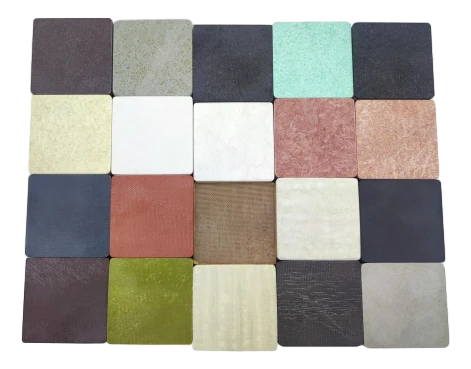
A: Virgin PTFE is natural white/translucent. Filled grades come in standard colors (glass-filled = light brown, bronze-filled = copper, carbon-filled = black). Custom colors are available on volume orders—ask about minimums.
Q: Can you supply material certification with the shipment?
A: Yes. We provide full material test reports, certificate of compliance, and FDA or RoHS documentation on request at no extra charge.
Q: What if my application is outside standard PTFE limits?
A: We work with modified PTFE compounds including PTFE+PEEK blends, PTFE+stainless steel, and high-purity grades for semiconductor service. Describe the operating conditions and we'll tell you if standard or modified PTFE is the right call.
Previous
More Information
Contact Us



Company Headquarters
NO.2 Longxian Road, Xinsheng Community, Longgang Street, Longgang District, Shenzhen, Guangdong, China